 (626) 286-0360
 Airsoft
 Fishing
 Air Gun
 TCG
TCG Events

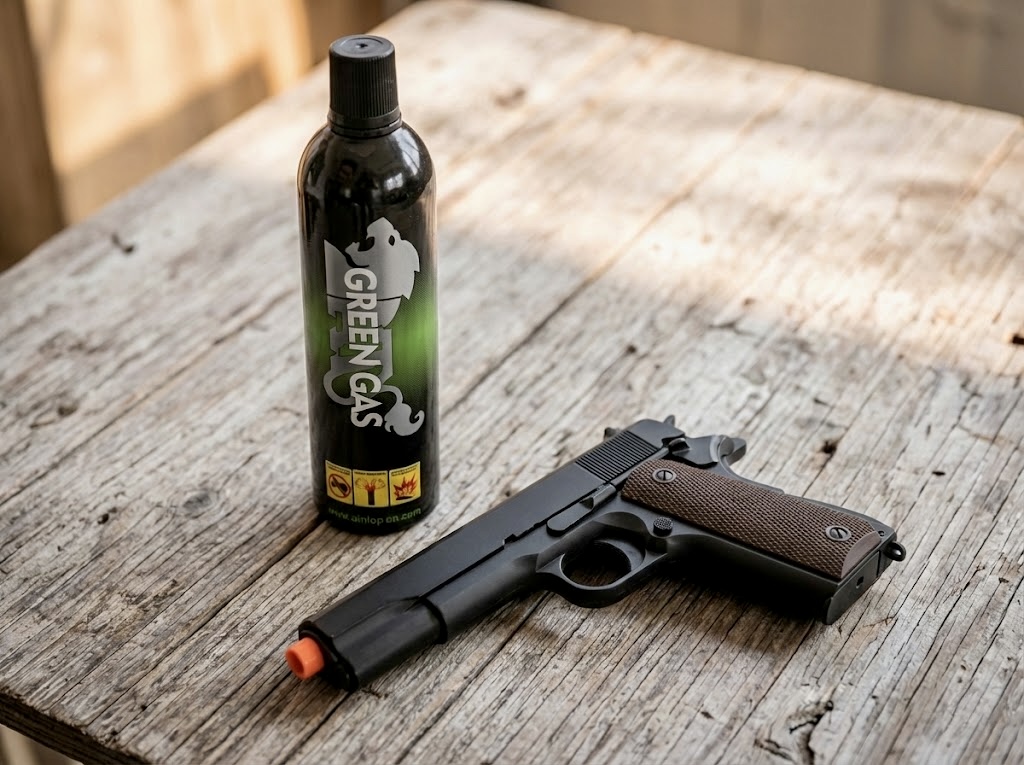
When it comes to charging up Airsoft guns, you've got two major gases to choose from: Green gas and CO2 (carbon dioxide). Either will give your gun the power to fire off plastic BBs, but they offer different degrees of strength, performance, and reliability.
Choosing the right option for your Airsoft gun depends on what you're trying to do, how much you can spend, and where you want to shoot.
So, grab your gun and get ready to gas up—this field manual explores the key differences between green gas vs CO2.
What are Green Gas Airsoft Guns?
Green gas uses a common propellant that you might find in your grill, heater, or firepit: propane. It's a reliable fuel source for Gas Blowback (GBB) Airsoft guns and comes in large, pressurized canisters filled to a maximum of 110–150 Pounds Per Square Inch (PSI).1 Green gas also uses built-in lubricants—like silicone—to keep your gun greased up and maintain its internal components.
Green gas offers relatively low pressure in comparison to CO2, making it the perfect fuel source for indoor play and warm-weather shooting.
Benefits of Green Gas Airsoft Guns
Now, let's get into the nitty-gritty. Green gas Airsoft rifles and pistols offer:
- Cost-effectiveness – A single canister of green gas can give you about 750-900 shots depending on the model of the gun and canister size—meaning you spend less than a penny per squeeze of the trigger.
- Convenience – With automatic lubrication keeping your gun slick, you won't have to spray it with grease between matches. Green gas's lower operating pressure also deals less damage to your internal components than stronger-shooting CO2. Plus, canisters make guns easy to top off and can be stored directly inside your firearm between uses, rather than removed and stashed externally.
- Field Acceptance – Both Green Gas and CO2 can be remarkably consistent if your platform is tuned for them. However, Green Gas is more widely accepted at CQB venues. Its lower pressure profile makes it "out-of-the-box" friendly for indoor games, whereas CO2 often requires specific valve adjustments to ensure you don't exceed the field's power limits.
Despite these upsides, green gas isn't all big bangs and bullseyes.
Drawbacks of Green Gas Airsoft Guns
The downsides of green gas include:
- Lower Base Pressure – Because Green Gas operates at a lower pressure than CO2, it often produces lower muzzle velocity and less recoil realism, depending on how the gun is internally tuned. A benefit of this liquid-based propellant is its consistency; it provides steady pressure throughout the entire canister. You won't see a drop in power as the canister empties, though you may experience "cool-down" during rapid strings of fire.
- Less versatility – When the temperature drops, so does green gas's reliability. Below 50°F (10°C), green gas loses pressure, leading to weaker (or no) shots. If you appreciate canisters but want to shoot in the cold, you can switch to winter-safe variations like red or black gas.
- Size and availability – Green gas canisters are bulky in comparison to CO2 cartridges and are legally classified as dangerous goods. That earns them a spot on the No Fly List, meaning ground shipping only. Canisters can also be difficult to find in brick-and-mortar shops, as they're generally only available in certified, specialty stores.
Even still, green gas remains a common choice for Airsoft power sources. But how does it compare to CO2?
What are CO2 Airsoft Guns?
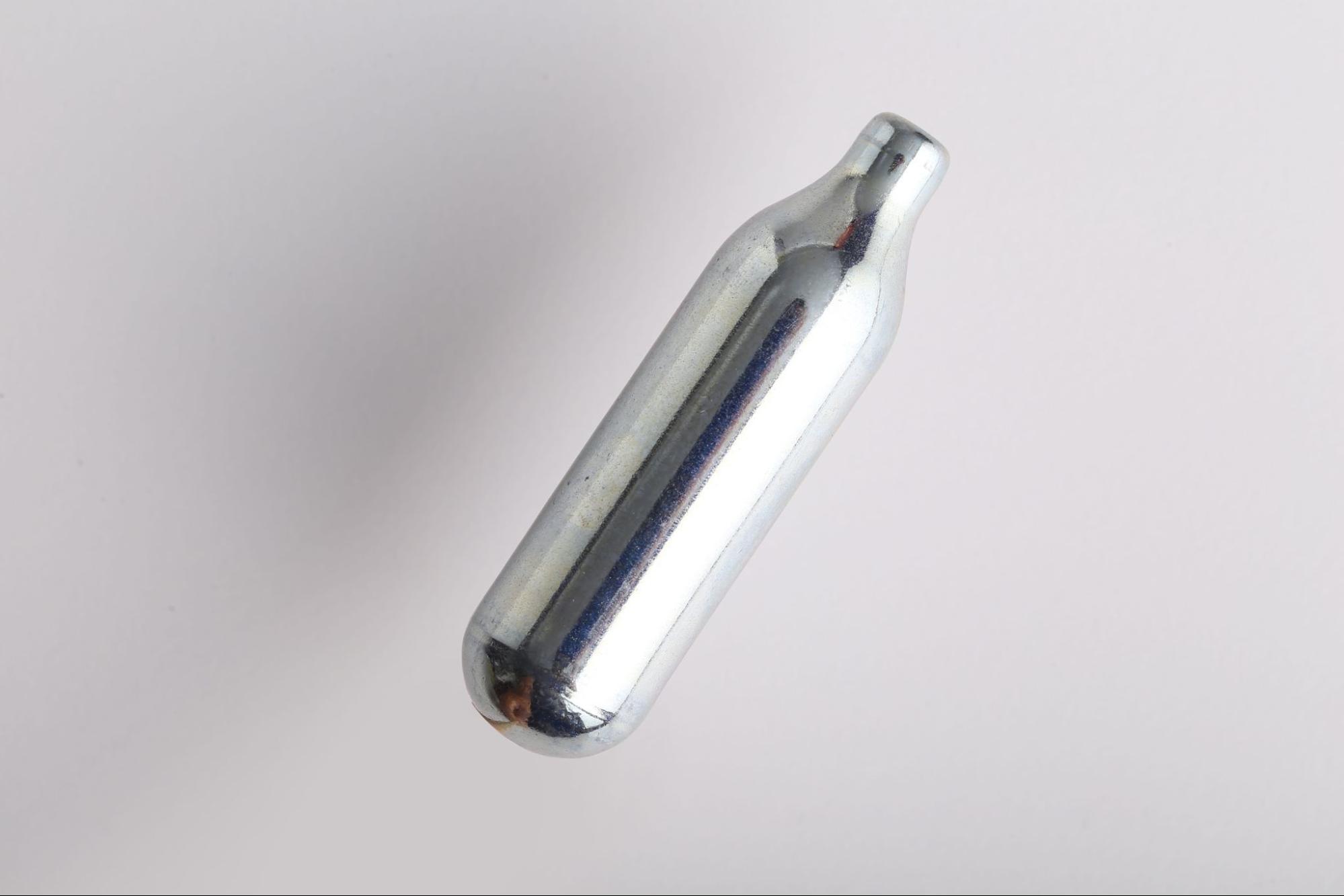
CO2 Airsoft guns charge up via small, disposable cartridges. They're loaded with 12 grams of gas and pressurized to a forceful 800+ PSI, allowing them to deliver a heck of a lot more stopping power than green gas canisters.2
Benefits of CO2 Airsoft Guns
The highlights of CO2-powered Airsoft guns include:
- Superior Availability & System Reliability – CO2 cartridges are significantly easier to find than green gas, stocked at most major big-box retailers and sporting goods stores rather than just specialty airsoft shops. Additionally, CO2 offers better brand-to-brand consistency in cartridge quality. In platforms specifically engineered for high-pressure use, CO2 systems are often more efficient and reliable, requiring less frequent maintenance than their green gas counterparts.
- Enhanced Realism – CO2 packs a more realistic recoil punch and doesn't drop as much firepower between magazines when compared to green gas.
- Non-Flammable & Enhanced Safety – A major practical advantage of CO2 is that it is an inert, non-flammable gas. Because green gas is essentially pressurized propane, it carries a fire risk during storage, transport, or in the event of a leak. CO2 eliminates this hazard, making it a safer option for home storage and much more convenient for players who need to travel to distant events.
- More versatility – From the heavy heat of summer skirmishes to bone-chilling winter wars, CO2 works in a wider range of temperatures than less versatile green gas.
- Usability – CO2 cartridges are smaller, lighter, and easier to handle than green gas canisters.
Basically, CO2 is strong, versatile, and convenient—but no power source is without its faults.
Drawbacks of CO2 Airsoft Guns
CO2's main disadvantages include:
- Price – A single CO2 cartridge blasts 70-90 BBs before running dry. They go for $0.50 to $0.90 a piece, meaning a single shot can cost over a penny.
- Inconvenience – CO2 is an all-or-nothing type of power source. Once you pierce a CO2 cartridge, you're committed to that power source until it's spent or vented. You can store your magazines with a cartridge already loaded between games to save time on prep, provided they are kept in a cool, stable environment. Just be sure to avoid leaving them in hot cars or high-heat storage, as CO2 is highly sensitive to temperature-based pressure increases.
- Extra maintenance – CO2 is powerful, but it can also be slightly corrosive to your gun's rubber components. Its extra stopping power also wears down your gun's parts more quickly, meaning more frequent maintenance to keep it in shooting shape. And, while CO2 operates at almost any temperature, repeated shots in weather under 60°F (15.5°C) can potentially freeze your valves.
- Lower acceptance – While CO2 is a reliable power source, it is occasionally restricted or banned at indoor and CQB venues. This is often a "rule of thumb" for safety management. Because many modern airsoft guns can accept both green gas and CO2 magazines, the higher-pressure CO2 can easily push a gun over the legal FPS (feet per second) limit. Rather than re-testing (chronographing) every single magazine swap for every player, many fields simplify their safety protocols by requiring green gas only.
Both CO2 and green gas have advantages and downsides, so how do they compare head-to-head?
Green Gas vs CO2: Head-to-Head Comparison
Learn how green gas and CO2 stack up against one another to decide which propellant to pick for your next battle.
Performance and Power
CO2 fires on high, offering a faster muzzle velocity with more pressure, impact, and range than green gas. This upgraded power also translates to extra recoil, making CO2 the superior source to mimic real kickback—but green gas is the clear winner for smoother shooting.
Temperature Performance
You can't pick the weather, but you can pick the right power source for your climate:
- Green gas – Traditionally, green gas performance is tied to the weather, but modern offerings allow you to "tune" your gas to the ambient temperature. Brands like Swiss Arms provide a spectrum of pressures so you can maintain consistent muzzle velocity year-round:
- 110 PSI (Low Pressure): Best for high-heat conditions (30°C+ / 86°F+) or for use in delicate plastic-slide pistols to prevent damage.
- 130 PSI (Standard): The versatile "all-rounder" designed for temperate days (15°C–25°C / 59°F–77°F).
- 150 PSI (High Pressure): Engineered for cold weather performance (10°C and below / 50°F and below), providing the extra push needed when lower pressures would cause the gun to cycle sluggishly.
- CO2 – CO2 remains the most reliable option when the temperature drops. The main caveat is "cool-down" caused by excessive consecutive shooting. This rapid firing chills the magazine internally, causing seals to stiffen and potentially leak. Since this is caused by gas expansion and not ambient weather, it's a factor to watch out for in both summer and winter play.
If you need a propellant that supports year-round play, opt for CO2 over green gas.
Cost Comparison
Another factor that'll play a role in your decision? Price point.
- Green gas – Lets your fire off several shots for just a penny.
- CO2 – Rings in at one to two cents per round.
While CO2 cartridges are more widely available, green gas is more economical for high-volume shooters.
Maintenance and Convenience
As you shoot, green gas works double-time, propelling your projectiles and lubricating your gun's internal components. Green gas is also safe to store in your gun between uses, meaning you don't have to discharge the whole canister every time you play.
As we mentioned earlier, CO2 is more corrosive and powerful than green gas. This added pressure wears down your gun more quickly, meaning you'll have to maintain it frequently. Despite common misconceptions, both propellants are safe for long-term storage within the magazine. The key is temperature control: never leave your gas or loaded magazines in a hot environment (like a car), as the heat can cause the gas to expand and put undue stress on your valves.
Field Regulations
Airsoft arenas often balk at CO2 usage, generally restricting it from CQB and indoor games or banning it on the premises entirely. Always check house rules before bringing a CO2 gun to an Airsoft match—it can make the difference between domination and disqualification.
Which Should You Choose? Recommendations by Use Case
Still can't decide? Let's break it down by use case, looking at how and where you play:
Choose Green Gas If You…
- Prefer indoor and CQB environments
- Live in a warm climate where the temperature rarely drops below 50°F (10°C)
- Shoot often and want to keep costs down
- Value low maintenance and self-lubrication
- Want convenient storage and refilling between games
- Are just starting out and looking for a more controlled shooting experience
Choose CO2 If You…
- Love to play outdoors where extra range is essential
- Live in a cold climate and need a gas that can keep up
- Crave a more realistic blowback experience
- Value stopping power over cost efficiency
- Are willing to put in more frequent maintenance
- Play at venues that allow higher FPS limits
Critical: Check Your Gun’s Internal Configuration
Before you make your final choice, you must understand that your airsoft gun's internal parts dictate which gas you can use. The magazine might fit, but the internals might not be ready for the pressure.
- Propellant-Specific Builds: Some guns are engineered exclusively for green gas (or even lower-pressure HFC134a). If you use a CO2 magazine in these platforms, the high pressure can shatter plastic slides or blow out seals instantly.
- CO2-Only Tuning: On the flip side, some guns are tuned specifically for the high pressure of a CO2 cartridge. These models often use much stiffer springs to manage the gas; if you try to use a green gas magazine in them, the gun may fail to cycle or "short-stroke" because the gas isn't powerful enough to move the slide.
- Dual-Fuel Compatibility: Some modern platforms are "Dual-Fuel," meaning they are reinforced to handle both. In these cases, you can swap between magazine types depending on the weather or the field's FPS limits without worrying about internal damage.
Load Your Airsoft Gun with Top-Quality Green Gas or CO2 from Evike.com
Whether you prefer the economical, controlled convenience of green gas or the raw power and reliability of CO2, Evike.com has the best Airsoft guns and power sources, bar none. From green gas to CO2 cartridges, accessories, and more, we offer the widest selection of sports shooting equipment available.
Gas up and roll out to battle with Evike.com. Explore our gas Airsoft pistols and gas Airsoft rifles today.
Sources:
- United States Department of Transportation. 60°F (15.5°C). https://www.phmsa.dot.gov/hazmat/documents/offer/SP11917.pdf/offerserver/SP11917.
- Reliant Holdings. Carbon Dioxide (REFRIGERATED LIQUID) Safety Data Sheet. https://cdn.prod.website-files.com/618d7ee594706af5c9ddcc67/640788d20985832b45e93b85_1-ALL-HSE-2060-IM-Carbon%20Dioxide%20(REFRIGERATED%20LIQUID)%20Safety%20Data%20Sheet.pdf.